Why Priceless People?
Older people and people living with dementia are loved by God but often treated as worthless by society and the church.
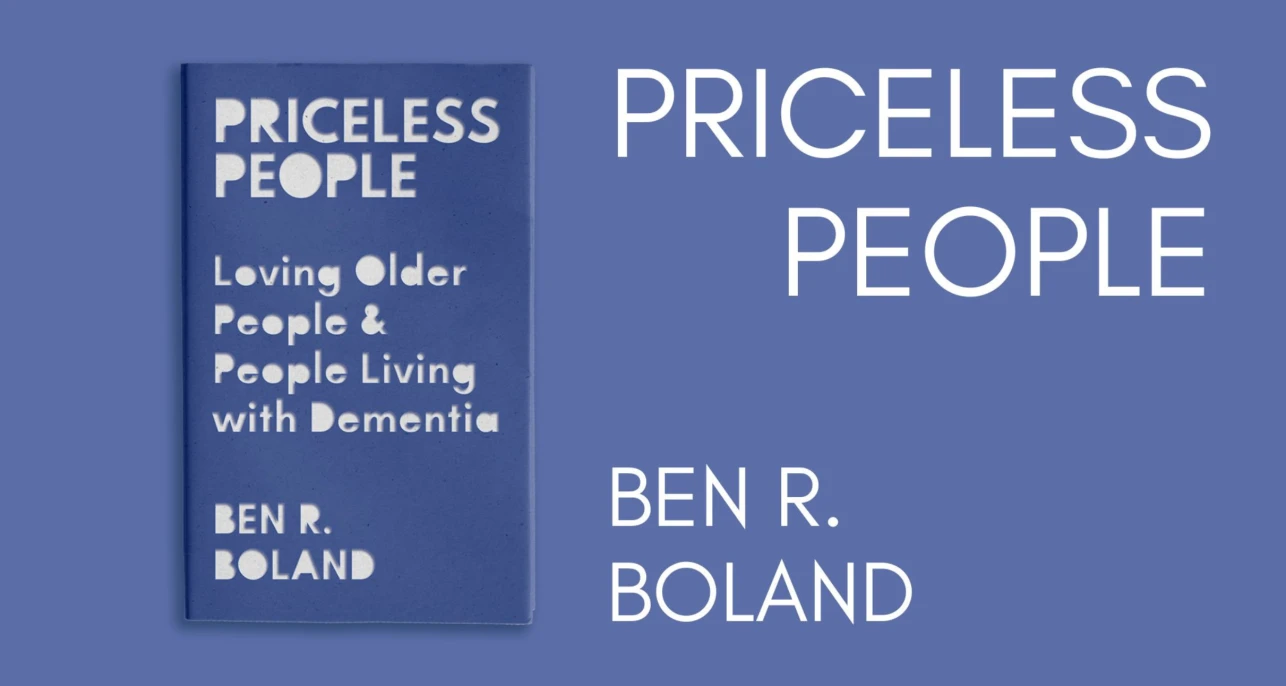
For example, the WHO ageism report found that half the world’s population is ageist against older people. Most churches are disproportionately focused on ministry to people under twenty and neglect ministry with people over eighty. Yet, the New Testament is almost exclusively focused on adult ministry. If you are interested in exploring or engaging in ministry with older people and people living with dementia ‘Priceless People’ might be the book for you.
The fastest growing demographic today, across the globe is older people. Dementia prevalence continues to increase. Research now focuses on helping people live well with dementia, as treatment let alone cure is beyond medicine’s current ability. In countries like Australia, dementia is the most common cause of death for women. Older people and people living with dementia are becoming more common yet receiving less ministry than other groups.
This lack of ministry is partially due to fear, ignorance and awareness.1 So, there is a need for theological and pastoral resources. While the last 25 years has seen the release of a number of Christian books on ageing and or dementia they basically fall into three categories:
1) Personal - Autobiography and biography’s which provided powerful personal insights but not generally applicable material.
2) Academic– well researched, often profound but dense and abstract.
3) Health Professionals wisdom – Christian nurses, doctors and allied health professionals have written with clinical expertise but at best only lightly engaged with the personal or academic resources.
Yet there was nothing written by a chaplain, that engaged with the literature and pastoral practice that was both theologically robust and pastorally practical regarding ministry with older people and people living with dementia.
Over fifteen years ago when I started working as a chaplain; having been ministering to older people and people living with dementia since I was 10, when I would visit the nursing home on the way to the bus stop for school. I thought I just had not found the rich resources on ministry with older people and people living with dementia. I searched for resources, completed postgraduate study and reflected on Scripture and my chaplaincy experience. I developed resources and strategies, learning from other chaplaincy areas, disability theology and trial and error.
Suddenly, I found myself training not only students and volunteers but experts and professionals. Presenting at conferences and writing articles as a subject matter expert. I dreamed of a text which would help the beginner and professional alike. A ‘primer’ to inspire, equip and encourage. I pitched the idea to chaplains, theologians, and researchers. Everyone agreed it was needed, no one wanted to write it – so my frustration grew.
Out of the blue, I received a call from Christine Brain, editor of the Australian Mother’s Union magazine. Would I write an article about how to minister with older people? One article became a series which spread over almost the whole year. The feedback from the pews and pulpits was exceptionally positive. Organically, and amazingly, I suddenly had the basis of a book.
After more work writing, wrestling and revising, I started sending draft chapters out for review by older people and people living with dementia and their loved ones, chaplains and academics from across the world. I discovered that, what worked in Australia was highly applicable across the English-speaking world. Beautiful brutal critique forced me to struggle with my theology, practice and expression. Questions drove me to write new chapters exploring challenges and opportunities.
Finally, I sent full manuscripts to the world experts asking if they might read and write an endorsement as I hoped it would make it easier to find a publisher. I am so thankful for the many who not only read it but provided robust feedback and allowed me to resubmit it to them. While I waited for their replies I researched possible publishers, and how to best pitch a book to a publisher. When I had over two pages of recommendations from the giants in the field, I felt ready to start submitting to my list of potential publishers.
I submitted to publishers with a focus on ageing, dementia and pastoral care, one expressed interest but then changed direction, an academic publisher offered to print it but required payment to do so. I submitted to generalist Christian publishers, from across the globe and contemplated self-publishing. To publishers big and small. Each submission required pages of specific details addressing their specifications. Often with the instruction ‘if you have not heard from us in 6 months’ time we are not interested, but do not submit to multiple publishers’. My patience and perseverance were sorely tested and refined.
Christmas eve December 2023, I got an email from Christian Focus Publications – We are keen. When can you complete the manuscript?
I replied ‘by Easter’, thinking that gave me excess opportunity to polish. As a big picture person, I struggle with fine details but Domini Lucas a Christian translator who is passionate about ministry with older people and people living with dementia stepped up. Not only did she identify issues with almost every sentence, but she also found Australianisms which did not translate to the UK. Multiple rounds of proof reading, revision and effort killed the Easter deadline.
Twenty-six thousand words, sixty-one A4 pages, divided into seventeen short chapters. Written in an easy reading style with each chapter building on the previous work while also designed to allow people to dip in to specific topics. ‘Jesus’ Love in the midst of Ageing and Dementia’ was finally ready to submit.
The Christian Focus Publications team identified more ‘areas for improvement’ including that the title was too wordy. Eventually, ‘Priceless People’ was christened and the work of typesetting, proofreading, cover design and marketing began.
My prayer is that God will use ‘Priceless People’ to encourage and empower His church, through the Holy Spirit to share Jesus’ love with older people and people living with dementia. That those who have known Jesus for a lifetime will be encouraged in their faith, those who are not in relationship with God will come into life to the full in the now and eternal. All praise to God, who made all people, made us in His image and loved us so much he died to bring us back from our failure to love and thus death into relationship with him. AMEN.