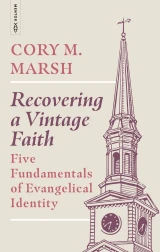
Recovering a Vintage Faith
Is Evangelicalism Losing Its Soul? A Call to Recover a “Vintage Faith”
Ever feel like the term “evangelical” is as elusive as Jello? You’re not alone. As I argue in my book Recovering a Vintage Faith, modern evangelicalism faces an identity crisis. It’s become so elastic that it’s hard to define and just as jiggly, often conflated with political leanings, racial demographics, or celebrity culture rather than core theological beliefs.
The current landscape views “evangelical” as a synonym for “republican” or even “white nationalist.” Critical authors, while sometimes valid in their critiques of American evangelicalism, often define the movement through the lenses of social or critical race theory, effectively silencing ethnic minority conservative evangelicals and advocating for an inclusivity antithetical to the tradition’s original identity. Mere self-identity as an “evangelical” doesn’t help much anymore, as there are now Roman Catholics, Hindus, Muslims, and scores of liberal persuasions all claiming the label despite how opposite they really are from genuine and historic evangelicalism. If “evangelicalism” can mean anything, it ultimately m eans nothing.
This modern evan-jello-calism is a far cry from the “vintage faith” or genuine evangelicalism which seeks recovery from decades of accretions vying for the label. I content that true evangelicalism is not about social identity, self-identification, gender, race, celebrity, or political preferences. Instead, it’s about core beliefs and the behavior that results from them. To move beyond the jello, I propose five fundamental components that historically define a genuine evangelical identity.
The Five Fundamentals of a Vintage Identity:
1. The Supremacy of Scripture. This is the foundational vintage principle, stating that the Bible holds absolute supremacy as the only rule of faith and practice. Everything truly evangelical begins with the authority of Scripture, setting this vintage faith apart from other Christian traditions. This includes belief in the Bible as “God-breathed” (inerrant, infallible, and sufficient), meaning it contains no authorial errors and cannot err and needs no outside help. A vintage faith embodies the Protestant maxim sola Scriptura, not just in creed but in practice, as Scripture has ultimate authority over lesser authorities. Tradition, reason, and experience serve as helpful guides but are subordinate to and can never supersede biblical truth.
2. The Exclusivity of Jesus. Central to vintage evangelicalism is the unquestioned belief in Jesus Christ alone for salvation. The evangel (of evangelicalism) is the power of God for salvation, received through repentant-faith. Such action-oriented belief involves a change of mind toward Jesus, necessitating a turning away from sin. This personal and spiritual conversion or “re-birth” results in an entirely new life, marked by joyful obedience to the Lord. It emphasizes Jesus’s vicarious atonement where his death serves as a propitiation for human sin, securing eternal salvation for believers.
3. Zealous Evangelism. Genuine evangelicals are not only believers in the gospel but are also passionate to preach and teach it to others. Such personal activism is driven by the conviction of human depravity and the need for personal redemption, understanding that transformed individuals, not laws or systems, ultimately transform society. The Great Commission calls believers to make disciples from all nations, a task empowered by the Holy Spirit, demanding boldness and a willingness to suffer for Christ. This distinguishes the church’s global mission from Israel’s more geographically fixed mandate.
4. Participating in Theological Education. Though often overlooked as a “fundamental,” I argue that a vintage faith necessitates a constant growth in knowledge of God and His Word. While not demanded this includes formal theological training in biblical languages, history, and theological disciplines, which equips pastors and laypeople to understand Scripture correctly and counter false teachings. Genuine evangelicalism prioritizes a commitment to learning that reflects God’s command to love Him with all one’s mind, debunking the false dichotomy between “heart” and “mind” or “piety” and “intellect.” Indeed, the Judeo-Christian legacy is one of reading and writing, emphasizing biblical literacy as essential for God’s people which is crucial for the vintage faith.
5. Consistent Local Church Fellowship. This final fundamental is the crucial X-factor for genuine evangelical identity, which, along with #4, distinguishes my model from others. A true evangelical is marked by tangible behavior of committing to a local body of believers where members are equipped, challenged, encouraged, and held accountable under faithful biblical exposition. Corporate fellowship, marked by love and discipleship, is where spiritual maturity and biblical literacy flourish, demonstrating evangelical belief in action, and serving as a powerful witness to the world. I contend, without living out evangelical beliefs among other evangelicals, there is no true evangelicalism.
Two major distractions are prevalent in modern (especially American) evangelicalism that tend to block the priority of these five fundamentals: political conflation and Christian celebrityism.
The tendency in evan-jello-calism is to conflate secular politics with biblical Christianity, politicizing the pulpit and creating divisive environments. Moreover, the supposed “evangelical vote” is a fabricated category invented by pollsters and intellectuals, functioning as a prescriptive mold without any biblical grounding. Christian “celebrityism,” the second major distraction, is a modern-day cancer that breeds competition among evangelical leaders and leads to a lack of accountability. This is evidenced by the now-routine moral failures of mega pastors, the ubiquitous practice of ghostwriting, and the deceptive use of technology to create facades of ministry success. A distinction does exist, however, between the “evangelical celebrity” and the “public minister,” the latter having a social influence for Christ and the gospel kept within proximity of genuine accountability.
Given the identity crisis and corruption of the term “evangelicalism,” perhaps it’s time we drop the label entirely. If so, what name could take its place? What label encapsulates a genuine and historic conservative expression of gospel-centered Christianity? Thouh not a perfect term, I suggest “biblical fundamentalism” as a worthy alternative. The idea signifies a commitment to core foundational beliefs rooted solely in Scripture, distinguishing it from cultural fundamentalism that adds man-made rules and is obsessed with matters not essential to the Christian Faith. Biblical fundamentalism aligns with the historic intellectual legacy of institutions like Dallas, Westminster, and Fuller Seminaries in their foundational commitments to biblical inerrancy and academic rigor. It also acknowledges and embraces ethnic diversity, countering the narrative of fundamentalism as an exclusively white movement.
If evangelicalism has lost its soul, I believe there is hope for recovery by returning to the five fundamentals and pushing aside the unnecessary distractions. A vintage faith is built on these verifiable beliefs and behaviors, offering a stable identity in a world where the term “evangelical” has tragically become useless.