Why Does Christ Feel So Far Away?
We say that Christ is glorious, sufficient and near—yet so often He feels distant. Robert Golding asks what it really means to pursue Christ when there are no shortcuts, quick fixes or substitutes.
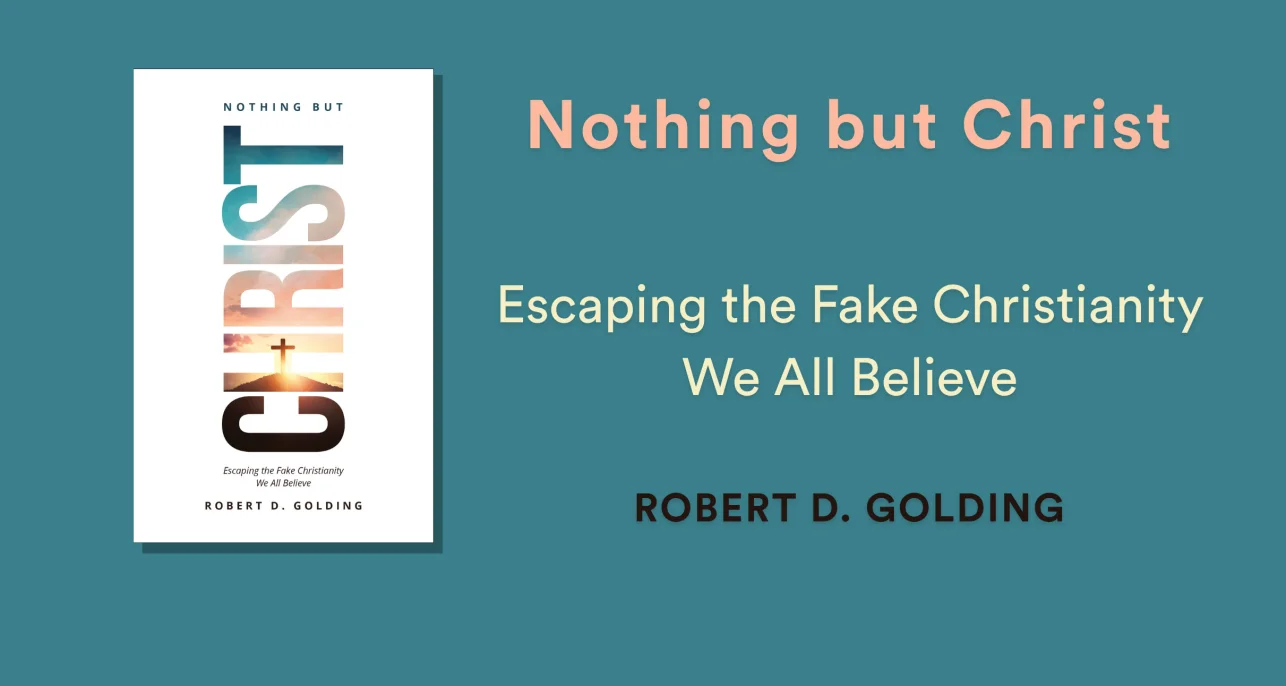
This post was written by Robert D. Golding, the lead pastor of the First Christian Reformed Church of Artesia, California, and author of our upcoming release Nothing but Christ.
Why does Christ feel so far away? He is “fairer than the children of men” (Ps 45:2) yet our minds are filled with people, not Christ. “He is the radiance of the glory of God” (Heb 1:3), yet we yawn as the preacher talks about Him. John saw Christ in His glory (Rev 1:9-16) and, retelling the experience, he said, “when I saw Him, I fell at His feet like a dead man” (Rev 1:17). The earth-shaking experiences of Christ throughout the history of the Church are too many to recount, and each time we read of them, the beholder finds himself undone, withering like soft petals under the bright morning sun. Why do we not see Him this way?
The claim of the Christian is not only that he believes in Jesus but that he has been saved by Jesus. That is a claim of experience, of knowledge and relationship. In fact, the claim to know Christ is not sufficient in terms of New Testament terminology. Those who are truly Christians are in Christ. Just one selective sampling is Ephesians chapter one, in which Paul uses the phrase “in Christ” or “in Him” a striking eleven times in thirteen verses! Christianity is the seemingly absurd claim to be so close to Christ that one is in Him like one is in his city of residence. We wouldn’t trust a man “from Los Angeles” who doesn’t know who the Dodgers are, or what traffic is! Why do we trust our “Christianity” when we don’t know what it is to feel the presence of Christ like John did?
Many Christians eagerly desire to know Christ at a deep level, to experience the “radiance of His glory.” But for many, the search for Christ at this deep level left them frustrated. They read the stories of the experience of Christ, but they never experienced them. They may have read “how-to” manuals proffering methods for accessing such profound depths of Christ-experience. For those too honest to pretend that these manuals worked, the end result is often abdication—the slow and subtle acceptance that Christ can never be known in such a powerful way, this side of eternity.
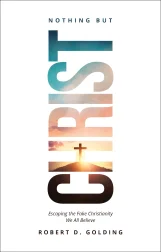
Nothing But Christ: Escaping the Fake Christianity We All Believe is not a manual. It will not promise 10 steps to “unleashing” the power of God’s presence, or 7 ways to “walk in the supernatural.” Rather, Nothing But Christ is smelling salts. It is a call to embrace the difficulty of experiencing the glory of Christ. It takes no shortcuts and promises no quick fixes. Instead, it describes the immense difficulty of the Christian life for what it is—the mechanism by which we begin to experience the glory of Christ. Some people are blessed with rapturous experiences of the glory of Christ seemingly out of the blue. But others, the vast majority, in fact, must daily take up their crosses in the pursuit of Christ only to catch momentary glimpses of Him from behind. This is by divine design.
The problem is that many have bought the lie that following Christ is meant to be easy and enjoying Him comes without cost. So, they either get frustrated and give up, or they delude themselves into thinking that the paltry union they have with Him is all that is possible until we see Him in glory. The biblical reality is different.
There are things we can do to pursue the experience of the glory of Christ, but those things are not to be found in the light shows and smoke machines of big evangelical churches nor the smells and bells of your local Eastern Orthodox or Roman Catholic congregation. Rather, the pursuit of Christ is to be found is the rejection of all else.
The faith of the Apostle Peter was so profound that Christ called it a rock (together with the faith of the rest of the Church) upon which the Church will be built (Matt 16:18). But we forget that Jesus did not appear glorious to Peter, nor many others, at this point (the transfiguration happened in the next chapter, Matt 17). That is why “many of His disciples went away and were not walking with Him anymore” (John 6:66b). What made Peter stick around and follow Christ with such great faith when so few others did? Was it some special experience of His glory? No, it was the recognition that there was nothing but Christ that could help him, “So Jesus said to the twelve, ‘Do you also want to go?’ Simon Peter answered Him, ‘Lord, to whom shall we go? You have words of eternal life’” (John 6:67–68). Peter realizes there is nothing but Christ in the world for him.
In this book, we will not puff ourselves up with platitudes and false hope that our efforts will unlock some special new reality of Christ’s presence. Rather, we will examine the biblical route to Christ’s heart which is marked by the primary rejection of all else. This new perspective, if you can adopt it, shades the experience of difficulty in this life differently. With it, our trials are no longer unfortunate experiences to be avoided as quickly as possible, but heaven-sent opportunities to learn that there is nothing but Christ that is truly lasting in this world. Once we adopt that attitude, difficulty takes new meaning but, more importantly, we begin to see Christ for who He truly is. And, perhaps, we will see Him like John did:
The hairs of his head were white, like white wool, like snow. His eyes were like a flame of fire, his feet were like burnished bronze, refined in a furnace, and his voice was like the roar of many waters. In his right hand he held seven stars, from his mouth came a sharp two-edged sword, and his face was like the sun shining in full strength (Rev. 1:14–16).
Endorsement: “Does the world allure you? If it does, the best solution is not only to say “no” to the enticements of sin, but more profoundly, to say “yes”—yes to the greater, rapturous pleasures of Christ in His person and work. And that Christ-centered vision is precisely where Rev. Robert Golding takes us in this book. As the apostle Paul declared, “Christ is all” (Col. 3:11). Those three words have inspired a long line of theologians—including Puritans like Philip Henry and Ralph Robinson—to write books on the glory, majesty and sufficiency of Jesus Christ. You no doubt have questions about life, deep philosophical questions about purpose, meaning, sin, temptation, depression, death, and eternity. You will find real answers to some of those big questions here, all from the heart of a pastor who has wrestled with each of these questions himself. Prepare to be abased in yourself and exalted in Christ. This book is a healing balm for the modern church, which is so often distracted, fragmented, and disillusioned. It is a clarion call to return to the One who is the anchor of our souls. So come, join Pastor Golding as he points you to the Christ who invites us into the true joy where He—and He alone—is the center of our hearts and indeed of the entire universe.”
—Dr. Joel R. Beeke, Chancellor and Professor of Systematic Theology and Homiletics, and a pastor of Heritage Reformed Congregation, in Grand Rapids, Michigan